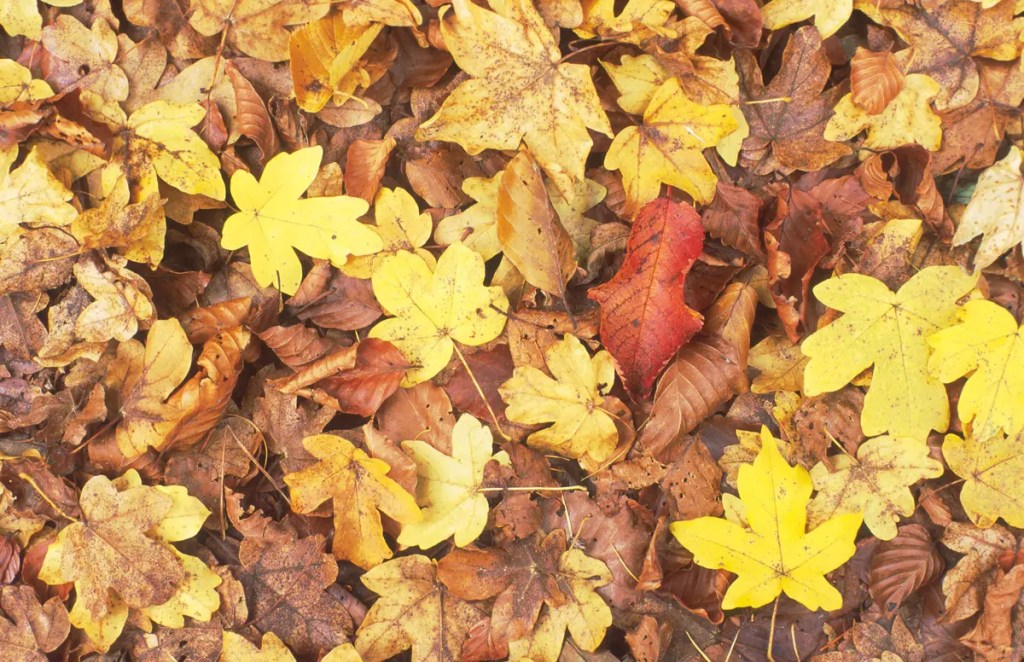
Fall is here, which means that for reasons which are inscrutable to me, some people feel the need to spend a portion of their limited time on this mortal coil moving leaves from once place to another.
I can somewhat understand the aesthetic reasoning, but by getting rid of leaf litter you’re not only wasting your time and energy, you’re potentially depriving your garden of beneficial nutrients.
Here’s a couple reasons why you should leave the leaves in your garden:
1) Turning leaves into solid waste contributes to greenhouse gas emissions–even when you dispose of leaves in a green bin, they end up in piles which don’t have enough oxygen to decompose well, causing a buildup of methane. The EPA estimates that in the U.S. alone, discarded leaves account for a whopping 33 million tons of solid waste a year.
2) Seedheads provide winter food for songbirds, hollow stalks and leaf litter create winter shelter for beneficial insects and hibernating amphibians. Some moths and butterfly species need leaf litter to complete their life cycles.
3) Leaf litter and leaf mold enriches the soil–no need for store-bought mulch! Leaves decompose over time, so if you can bear with how they look for a couple months, you’ll be rewarded with healthier plants in the spring.
4) Brush piles provide shelter for a wide variety of organisms. If you’re concerned about rats or mice, you can discourage them by ensuring there aren’t food sources around, such as securing your compost.
5) Leaf blowers are objectively annoying, and waste energy (gas or electric) that we really don’t need to be using.
6) Leaf litter can help with weed suppression, meaning less work for you. It also helps with moisture retention in the soil; crucial in a drought-prone area like southern Vancouver Island.
Tips for winterizing your native garden
-As you prune or rake up materials, create a brush pile in a corner to offer habitat for hibernating insects and other creatures.
-Plant seeds that require cold stratification in the fall, and make sure there are areas with and without leaf mulch to create a variety of microhabitats.
-Leave seed heads intact to feed birds through the winter.
-If you have big leaves like maple or chestnut, they can suppress growth as they create a thick mat. You can rake these leaves into a bin and use an edge trimmer to chop them into smaller pieces, turning them into rich mulch to spread over your garden beds.
 UNLAWNING
Leave a comment